

From One Truck to a Regional Operation
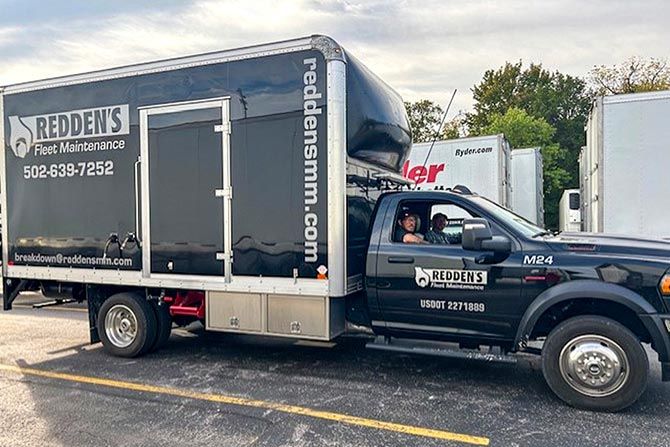
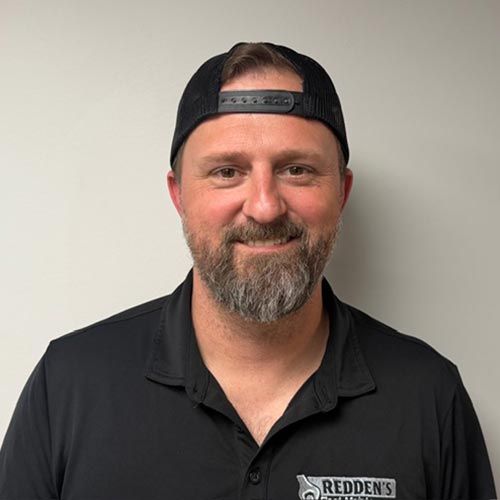
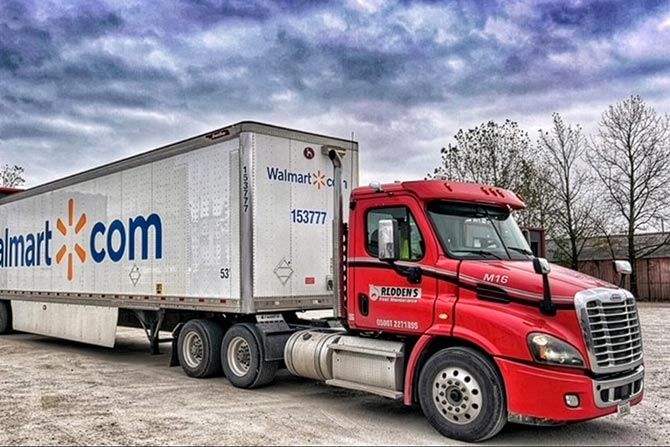
Redden’s Fleet Maintenance began humbly, with Brandon Redden working alone out of a pickup truck, repairing trailers. That was 2009. “Brandon started out with one truck, just him in a truck sitting in a parking lot, changing tires,” said Nathan Bennett, the company’s marketing director.
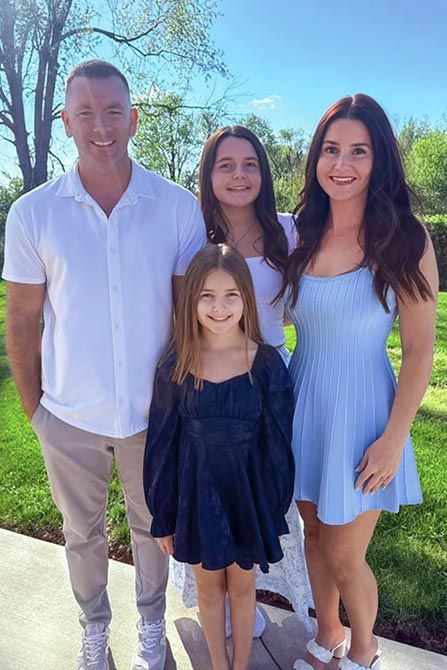
Over the years, that modest start evolved into a full-service operation, with Brandon and his wife, Nina, serving as owner-operators. The company now includes multiple service bays, a large mobile repair fleet and a parts division.
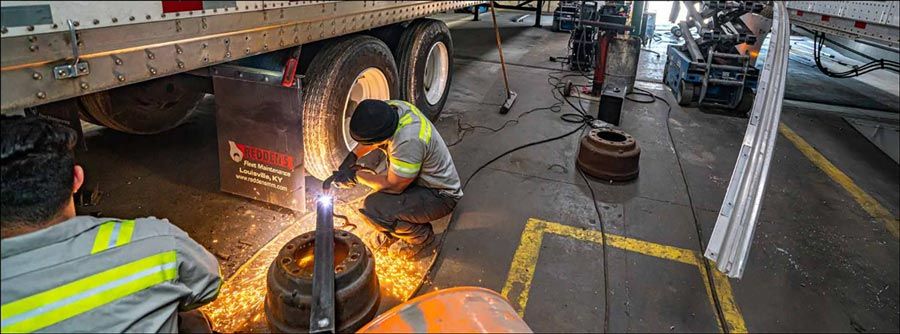
Today, the company operates out of a Louisville headquarters with 10 bays and a secondary location in Sonora with additional capacity. Their service fleet, consisting of 20+ trucks, allows technicians to perform repairs directly on-site for customers and deliver parts, as well as pick up and return repaired trailers.
In addition to repairs, Redden’s also sells trailer parts and provides truck and trailer parking, utilizing roughly a dozen acres to support logistics and fleet operations. “We aim to service larger fleets,” Brandon explained, “but we also work with owner-operators and their trailers.” That comprehensive approach helped the company grow into one of the larger trailer maintenance operations in the region.
The Day That Changed Everything
On Nov. 4, 2025, UPS Flight 2976 tragically crashed during takeoff, and Redden’s Fleet Maintenance in Louisville was in extremely close proximity to the resulting wreckage. The event brought operations to a standstill and forced a test of resilience that would reshape the company.
The company’s main shop sits adjacent to the airport, near the intersection of Grade Lane and Knopp Avenue — precisely where the aircraft went down. “The plane crashed about 100 to 150 yards out in front of our office,” Brandon said. The aftermath was catastrophic and resulted in the destruction of lots owned by Redden’s that were utilized for parking and logistics.
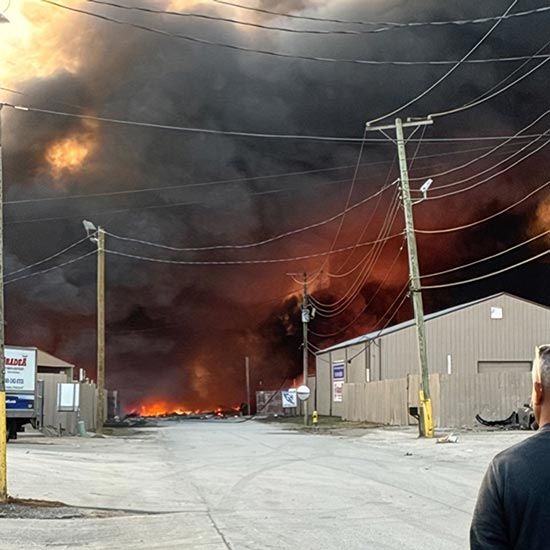
“The crash site was basically a line of flames across both roads leading into and out of the Louisville location,” Nathan recalled. Though no employees of Redden’s were physically injured, the proximity left a deep psychological impact. “There were five of us in the office when it happened, and it definitely traumatized all five of us,” Brandon said. “It’s been a horrible situation to say the least.”
The chaos didn’t end with the initial explosion. “It was raining oil and fire over the whole area,” Nathan said.
“Explosion after explosion occurred for numerous hours after the initial crash. Employees were trapped on-site for over two hours,” Nina said. “They had to sit there until first responders were able to evacuate the team through Waste Management’s property at the end of Melton Ave.” Even though all employees eventually left safely, the fires continued to burn for weeks, fueled by nearby industrial materials.
A Business Forced to Stop
While the human toll was significant — three crewmembers aboard the airplane and 12 people on the ground resulted in fatalities, and 22 others on the ground were injured — the operational and financial impact was also devastating. “We could not access our office, parts warehouse or shop for almost three months,” Brandon said.
For a company built on daily service and logistics, the shutdown was devastating. “The business that Nina and I had built over the last 17 years was completely shut down in one day,” Brandon said.
Without access to their primary facilities, the Redden’s team had to come together in order to survive as more and more challenges accumulated. Utilities were down. Inventory was inaccessible. Employees had limited work. “We didn’t have water or electricity,” Nina said. “We were lucky because we did have the Sonora location and our mobile trucks still available to cushion the blow. Even then, it was not easy to stay afloat.”
Financial strain followed. “We’ve had to make tough financial decisions in order to survive, so it’s been a very difficult situation to manage,” Brandon said.
Rebuilding Through Adaptation
Despite the disruption, Brandon, Nina and the Redden’s team have found ways to adapt. The company relocated parts inventory, rerouted deliveries and leaned heavily on their mobile team. Over time, they regained access to their main facility and have gradually been revitalizing their operations. “The experience propelled internal changes. It forced us to be more efficient,” Brandon said.
Even amid the crisis, the company has continued investing in its future. Just days before the crash, they began implementing a new business software system. “We were on day two of training when our company was forced to shut down,” Brandon said.
Still, they pushed forward and eventually launched a new online parts sales platform. “Customers can now get online, search for the parts they need, add them to their cart and purchase them just as you would on Amazon,” Nathan explained. “It’s really exciting.” This new process represents a significant step toward modernization and scalability.
Community Support Amidst the Crisis
While the crash led to many unexpected problems, it also highlighted the strength of the local business community.
“Everybody pulled together as a team,” Brandon said. “All of our customers and vendors were very helpful through the process.” Customers offered space and manpower to help Redden’s operations move. “Some of our competitors allowed us space to have our parts delivered to their locations in order for us to receive materials to keep our repair jobs moving forward. Customers also made a point to supply us with a steady flow of work to ensure we survived,” Nina said. That support was critical to Redden’s making it through these tough times.
“If any good came out of this tragedy, it revealed that we are lucky to have such great working relationships with not only our customers, but also our competition,” Nathan added. The local response reinforced that Redden’s is valued within the community. “If we weren’t a company that was trusted and respected, we wouldn’t have garnered the support that we received,” Nathan said. “It was obvious that customers wanted us to be here.”
A Family Business at Its Core
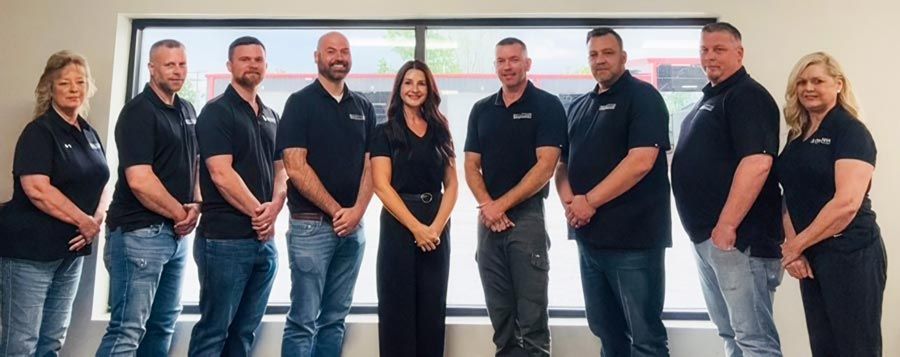
At its heart, Redden’s Fleet Maintenance remains a family-run operation — a quality that employees say defines its culture. “Redden’s feels more like a family now than ever before,” Nathan said. “Both Nina and Brandon do an amazing job at making everyone feel valued and like part of the family.”
That environment has contributed to long employee tenure and strong internal loyalty —factors that proved invaluable during the crisis. The sense of unity helped the team navigate uncertainty and rebuild together.
Moving Forward
Today, Redden’s Fleet Maintenance is back in operation, though recovery is ongoing. Some areas, including parking facilities directly impacted by the crash, are still in the process of being restored.
The tragic event has left a permanent mark — but also a renewed sense of purpose. From a single truck in a parking lot to a multi-location operation that weathered one of the most disruptive events in its history, the company’s journey reflects both the fragility and resilience of running a small business. For Brandon and Nina, the focus remains on rebuilding — not just infrastructure, but stability for their employees and customers.
Through family, friends and the community, the team at Redden’s Fleet Maintenance has remained strong and will continue to provide outstanding service to the trucking industry.
To learn more about Redden’s Fleet Maintenance and their services, please call them at (502) 639-7252 or visit their website at reddensmm.com.